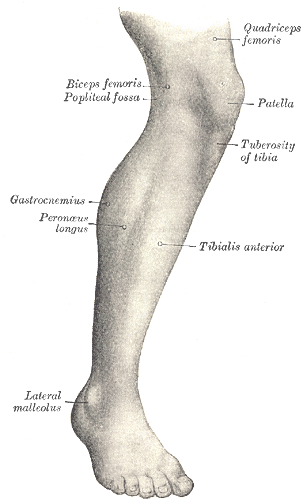
Human leg
The human leg, broadly defined as the entire lower limb, is anatomically restricted to the part between the knee and ankle, known as the shank. Each leg contains 30 bones, including the major long bones: the femur (thigh bone), tibia (shin bone), and adjacent fibula. Through evolution, human legs have uniquely specialized for efficient bipedal gait, allowing for sustained upright walking, unlike other primates who can only achieve this for short, energy-intensive periods. This adaptation has resulted in exceptionally long and powerful legs—measuring 171% of the trunk length—supported by specialized muscles like the gluteals, and contributes to functions like standing and movement. Subtle gender differences also exist, with females typically having greater hip anteversion and males possessing longer femur and tibial lengths.
Source: Human leg — Wikipedia · Summary by RollWiki AI · Language: English
Hello from Cyprus ♥️