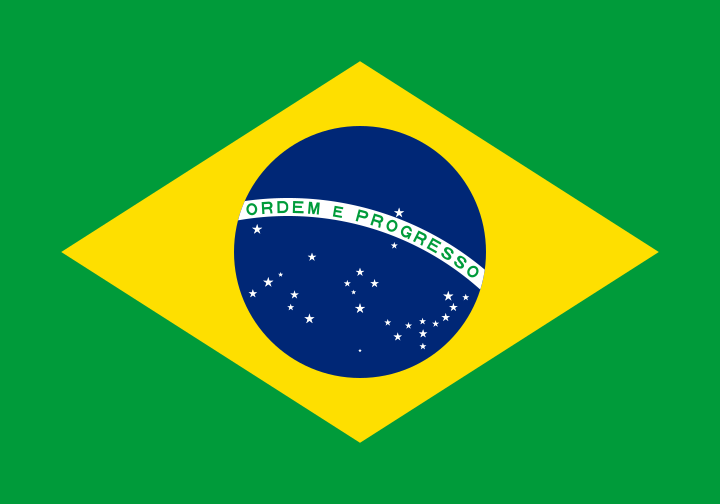
Brazil
Brazil, the largest country in South America and the world's fifth-largest by area with over 213 million people, stands out as the only nation in the Americas where Portuguese is the official language. Its vast territory includes most of the Amazon basin, home to the world's largest river system and extensive tropical forests, making Brazil the most megadiverse country globally, albeit grappling with environmental concerns like deforestation.
Portuguese explorer Pedro Álvares Cabral claimed Brazil in 1500, leading to a colonial period that saw the import of enslaved Africans until Prince Pedro declared independence in 1822, establishing an empire that eventually abolished slavery in 1888. Following a transition to a republic in 1889, Brazil navigated periods of political instability, including dictatorships, before solidifying its current democratic federal republic with the 1988 constitution.
Today, as an emerging global power, Brazil boasts one of the world's top ten largest and most diversified economies, playing a significant role in global trade and as a founding member of major international bodies like the UN, G20, and BRICS.
Source: Brazil — Wikipedia · Summary by RollWiki AI · Language: English