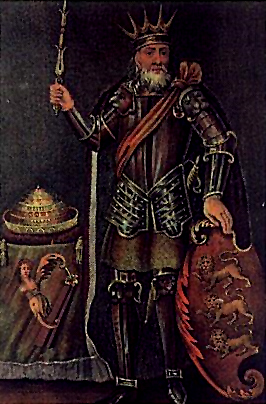
High King of Ireland
The High King of Ireland (Irish: Ardrí na hÉireann) was a royal title for those who had, or claimed, lordship over all of Gaelic Ireland, encompassing both historical and legendary figures. However, modern historians believe the medieval literary tradition of an unbroken line of High Kings, ruling from the Hill of Tara, was largely an 8th-century construct to legitimize powerful dynasties. While the concept of national kingship emerged in the 7th century, it only became a political reality during the Viking Age, and even then, High Kings functioned as overlords receiving tribute, not rulers of a unified state.
Early Irish kingship possessed a sacred character, with kings sometimes gaining power through a ritualistic "marriage" to a sovereignty goddess and needing to be physically blemish-free. This sacred dimension coexisted with Christianity for generations, as exemplified by Diarmait mac Cerbaill, a mid-6th century King of Tara, who may have been the last to perform such a ritual and reportedly died a mythic "Threefold Death." This tradition highlights the enduring blend of ancient customs and emerging Christian influence in Ireland's royal history.
Source: High King of Ireland — Wikipedia · Summary by RollWiki AI · Language: English